 Sourced,
 Regency Tourism Office
 04History
 06How to Get There
 07Best Time to Visit
 09Etiquette
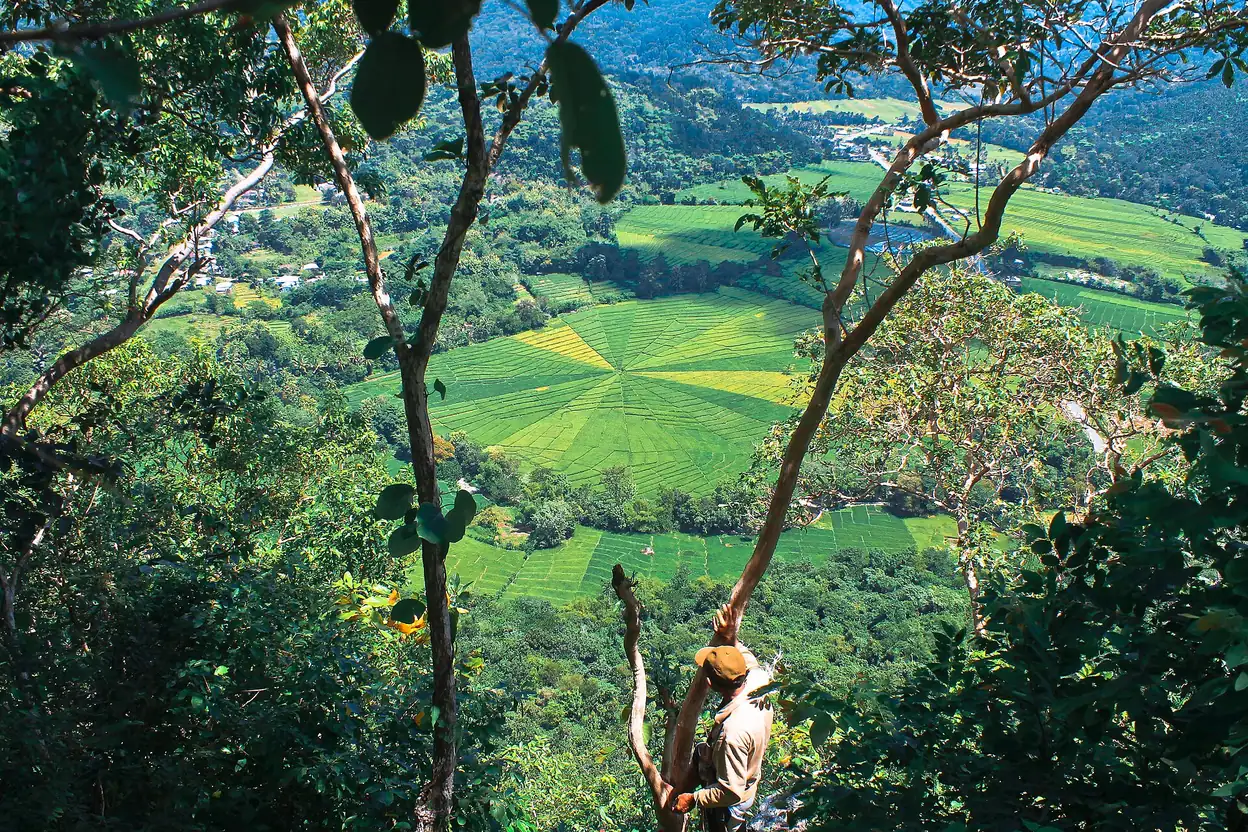
 The Lingko Wae Mata field at Nampar Macing, Sano Nggoang, Flores, seen from the forest above.
 The lodok, or centre point, of Lingko Wae Mata at Nampar Macing, Sano Nggoang, Flores.
 Rice panicles forming grain after dew, shown as a general crop scene with no stated location.
 A rice crop under morning mist, shown as a general weather scene with no stated location.
 Dew-covered threads on rice blades, a general close-up subject with no stated location.
 Young rice growing in a paddy, shown as a general farmland scene with no stated location.
 Sources shown
 Interest stated openly
 Send your question
 Decide in writing
On this page
- What is the spider web rice field?
- Where is it on Flores?
- How do you reach the viewpoint?
- When do the fields show the pattern best?
- How should visitors behave at a working farm?
- Who is behind this guide?
- Which page answers your next question?
- What do first-time visitors ask about the spider web rice field?
- Which published prices did we check?
- Which sources support this page?
- How do I reach the desk?
By Spider Web Rice Field Editorial Desk
The spider web rice field is a group of web-patterned paddies in Meler Village, Ruteng District, on Flores, Indonesia, which the regency tourism office names Lingko Meler. It is working farmland under Manggarai custom. You reach it by road on the Labuan Bajo to Ruteng corridor, then climb on foot to a viewpoint.
Travel writers often call the same land after Cancar, so Cancar rice fields, Cancar rice terraces and Spider Rice Field can all point here. Our page on the Lingko Meler and Cancar names untangles them. This page gives you the orientation and sends you to the detail when you need it.
What is the spider web rice field?
The Manggarai regency tourism office lists the site as Lingko Meler, known to visitors as Spider Rice Field. In Manggarai usage a lingko is customary land, and the office says it is divided among residents of the customary area. On the ground the division appears as long lines running from a central point, the lodok, out to the furthest field, the cicing. Seen from higher up, those lines make the web.
Expect several circles rather than one. Kompas counted eleven lingko from eight kampung of Meler Village along this stretch of rice land, naming fields such as Molo, Lindang and Temek. Other sources give different counts, possibly because they count different things.
The office links the shape to the Manggarai value of togetherness. That reading comes from the local government's own description, and it changes what you are looking at: the pattern is a record of how families share land. For the mechanics, read how lingko rice fields work. UNESCO and World Heritage claims for these fields have nothing behind them, so read such pages with care.
| Question | Short answer | Read more |
|---|---|---|
| Official name | Lingko Meler, Meler Village (regency tourism office) | Where it is |
| Town to plan around | Ruteng, capital of Manggarai Regency | Ruteng as a base |
| Labuan Bajo to Ruteng | About 3 to 4 hours, about 110 to 140 km (regency tourism office estimate) | Labuan Bajo to Cancar |
| Clearest pattern | Midway between planting and harvest (Travelfish) | Rice season |
| Payment at the viewpoint | Local arrangement; listings differ | Entrance fee |
Where is it on Flores?
Meler Village lies in Ruteng District, Manggarai Regency, on Flores in the province of East Nusa Tenggara. Ruteng, the regency capital, is the town to plan around. Kompas puts the fields just off the Trans-Flores road linking Labuan Bajo with Ruteng, which shapes your route: coming from Labuan Bajo, you reach them before you reach the town.
Published distances from Ruteng differ by source, so treat any single figure as approximate and leave slack in your day. See where the spider web rice field is for those figures, each with its source.
With a driver, say Cancar or Lingko Lodok Cancar, then Weol once you are near. A single name may not match the one your map uses, which is why the page on the names lists them all.
How do you reach the viewpoint?
The regency tourism office gives Labuan Bajo (Komodo Airport) to Ruteng as about 3 to 4 hours on the Trans-Flores road, about 110 to 140 km, and says those estimates can change with road and weather. Because the fields come before town on that road, the office's estimate covers more road than you need, though bus reports run longer.
Two plans follow from that geography. You can treat the fields as a stop on a journey across Flores, which suits anyone already heading east. Or you can sleep in Ruteng and go out from there, which leaves more room to wait for better light. A same-day return from Labuan Bajo that goes as far as Ruteng means six to eight hours on the road by the office's figures, before you have climbed anything.
The last part is on foot, up a hillside path. The Weol Hill viewpoint page covers the climb and how reports of it differ. Vehicles and public transport are on how to get to the spider web rice field, and the day trip page tests whether one day is enough.
No government tariff for the viewpoint turned up, so payment is a local arrangement and listings differ. The price table on this page shows two of them with their source, and neither is ours.
When do the fields show the pattern best?
Travelfish points to the stretch midway between planting and harvest, because rice that is tall or already harvested hides the pattern. That describes a stage of the crop, and it is a more useful target than a calendar month.
Sources that do name months contradict one another, and plots are not all at the same stage. Be wary of any guide that names a firm week, and compare the claims on the best time to visit page, which sets the competing seasons side by side.
How should visitors behave at a working farm?
The plots below the viewpoint are customary land that residents farm, so the view is a by-product of somebody's livelihood. The regency tourism office's 2026 guide tells visitors to ask first and to respect custom when a ceremony or a traditional house is the subject of a photograph. Apply the same habit to anyone working in the fields.
Keep to the paths you are directed to and stay off the banks between plots; the etiquette page for this working farm explains why that matters. Before flying anything over the fields, ask residents and accept the answer you get.
Who is behind this guide?
Spider Web Rice Field is an English-language travel guide with a request desk, under Juara Holding Group. No government office, village authority or tour operator stands behind it, and it neither owns nor manages the fields or any viewpoint. Because a request can end in a paid booking, this site has a commercial interest. You would see the fee, the price and the contracting company in writing before agreeing to anything. The about page and the disclaimer give the full position.
Which page answers your next question?
- Is the detour justified? Read whether the spider web rice field is worth visiting.
- What might you pay at the entrance? Read the entrance fee comparison.
- How should you frame a photograph? Read light and framing at the fields.
- How old is the pattern? Read the history of lingko.
- Who farms it? Read the Manggarai people.
- Want short answers only? Read the visitor FAQ.
What do first-time visitors ask about the spider web rice field?
Are the Cancar spider web rice fields real?
Yes. The Manggarai regency tourism office lists the site as Lingko Meler, and Kompas counts eleven lingko in that stretch of rice land. The web comes from how land is divided, so how sharply it shows depends on the state of the crop on the day.
When are the spider web rice fields green?
Published seasons conflict and plots do not all move together, so treat any named green month as a claim. The best time to visit page lists the claims by source so you can weigh them against your dates.
How were the Cancar spider web rice fields formed?
Through land division. The tourism office says customary land, called lingko, is divided among residents of the customary area, with long lines running from a central lodok to the outer cicing. The history of lingko page covers the disputed dates.
Are the spider web rice fields only found in Flores?
Claims that fields like these exist nowhere else appear in official quotes and single studies, and this guide treats them as claims. For similar fields elsewhere on the island, see other spider web rice fields in Flores.
Are there guided tours to the spider web rice fields?
Commercial operators publish trips that include the fields. This guide does not run any. The day trip page looks at what they describe, and the desk can look into a request, with terms set only in a written offer.
Which published prices did we check?
Public third-party listings and press reports, each with its source and the month we checked it. These are not our prices or offers. No official tariff for the viewpoint was found, several figures are old, and sources disagree, so check locally before you rely on a figure.
| Item | Published price | Source | Checked |
|---|---|---|---|
| Sawah Lingko Cara entry, per person (GeoKepo listing, record updated Feb 2026; it says to confirm at the venue) | IDR 20,000 | geokepo.id | Nov 2026 |
| Spider Web Rice Fields viewing ridge, paid at a small pavilion (Lonely Planet listing, undated) | IDR 25,000 | lonelyplanet.com | Nov 2026 |
Which sources support this page?
- Manggarai regency tourism office: Lingko Meler
- Manggarai regency tourism office: 2026 pocket guide
- Kompas Travel: promoting the Lingko Lodok fields, 2017
- Wikipedia: Manggarai Regency
- Travelfish: Cancar spider web rice fields
- GeoKepo: Sawah Lingko Cara listing
- Lonely Planet: Spider Web Rice Fields listing
How do I reach the desk?
Send your rough dates, your starting point and what you hope to see to WhatsApp +62 811-3941-4563 or to bd@juaraholding.com. The desk answers questions and says what it can look into. It has no cars, rooms or tours of its own to promise, and only a written offer binds anyone.
Send the desk your dates and route across Flores. The desk replies in writing.
Ask the desk on WhatsApp bd@juaraholding.com